


A discipline in the making
Enterprise design
Enterprise design is the practice of designing an organization so that what it stands for, what it offers people and how it actually runs fit together. Most problems I'm called in for don't live in one screen, one process or one org chart. They live in the gaps between them. That's where I work.
What counts as an enterprise?
An enterprise can mean many things. Anything where people come together to make something happen qualifies.
- A business
- A non-profit
- A project
- An initiative
- A collective effort
- One person's initiative
Everybody is part of many enterprises. Your company, your team's project, the board you sit on, the side project you swear is almost done.
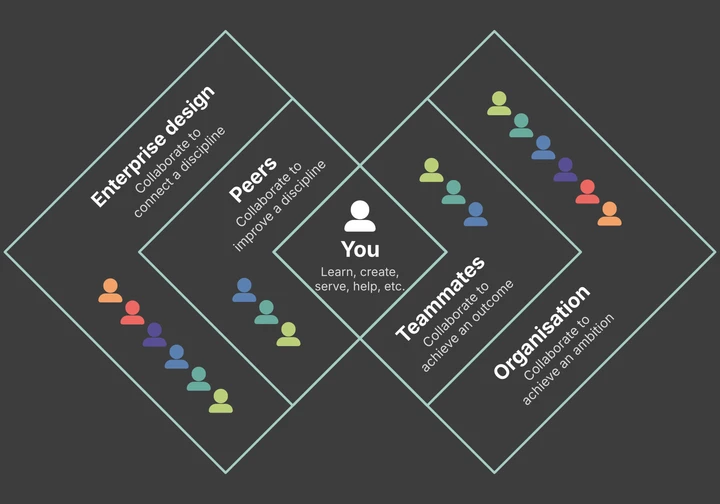
The problem lives in the gaps
Each part of a company usually works fine on its own. Things break where one part hands off to the next, and nobody owns that space.
- Purpose
- Values
- Strategy
The campaign promises what the call centre can't deliver.
- Customers
- Employees
- Partners
The new app can't see what the old system knows.
- Processes
- Systems
- Data
Why it matters now
AI makes every part of a company faster. It doesn't make the parts agree. Automate a messy process and you get the same mess, at machine speed. When the ground keeps moving, you need a map of the whole: what you stand for, what you sell, how it really runs, and how one change ripples through the rest. With that map, AI becomes a helper. Without it, it's a very efficient way to make things worse.
- Keep the core humanThe few things that make you you are decisions, not tasks. People make those calls.
- Give the support work to AIThe repetitive part that eats the week is exactly where AI earns its keep.
- Let a machine watch the detailsIt follows everything underneath, and raises a hand when something moves on your core.
More on how I bring AI into a business in How I use AI.
Don't take my word for it
Strategy consultants, researchers and design schools keep landing on the same conclusion: results come from how the parts of an organization fit together, not from polishing one of them.
- 48%
of digital initiatives meet or exceed their business targets. When business leaders co-own delivery with IT, it's 71%.
Gartner, CIO and Technology Executive Survey, October 2024 - 70%
of the challenges in AI projects come from people and processes. Technology accounts for 20%, algorithms for 10%. Only 26% of companies get tangible value from AI.
BCG, “Where's the Value in AI?”, October 2024 - #1
Out of 25 factors tested, redesigning workflows has the biggest effect on getting bottom-line value from generative AI. Only 21% of companies have done it.
McKinsey & Company, “The State of AI”, March 2025 - 3×
the revenue growth for the top 20% of large companies on human-centred design behaviours. Fewer than a third of leaders say they test early with real users.
IDEO, “IDEO IQ Report”, 2026 “The ‘experience’ isn't just the screen, and it never has been.”
Nielsen Norman Group, “State of UX in 2026”, January 2026 “Choosing a strategy entails making decisions that explicitly cut off possibilities and options.”
Roger L. Martin, “The Big Lie of Strategic Planning”, Harvard Business Review, 2014
Enterprise design is the practical side of that idea: making those choices visible on one map, so everyone can see what they cut off and what they connect.
EDGY: one language for everyone in the room
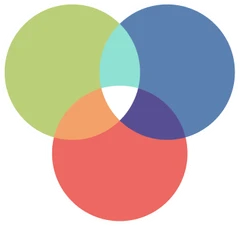
EDGY is an open-source language for enterprise design, published by Intersection Group. Underneath, it stays almost suspiciously simple: people perform activities, using and creating objects, to achieve outcomes. On top, it describes any company with three facets. Where two facets meet, you get the intersections people usually manage in separate silos. That simplicity is the point: a CEO, an architect and a designer can read the same map without a translator.
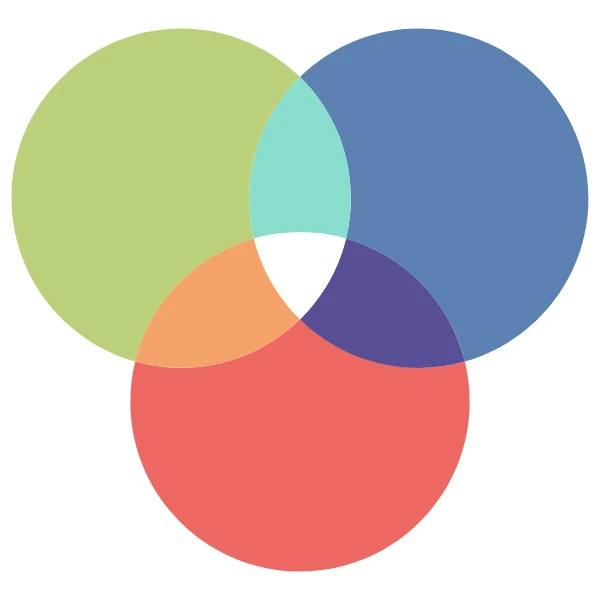
Facets
- Identity Why do we exist?
Purpose, values, culture: what the organization stands for and what it won't compromise on.
- Experience What do people go through?
What customers, employees and partners actually live when they deal with the organization.
- Architecture How does it really work?
Capabilities, processes, systems and information: how the organization delivers on its promises.
Intersections
- Organisation Identity × Architecture
How people are structured and work together to live the purpose.
- Brand Identity × Experience
How the purpose shows up in every interaction, not just the logo.
- Product Experience × Architecture
What the organization offers, and the machinery that delivers it.
From abstract to tangible
- OutcomeWhyHowWhat
What we want, or what will happen. Outcomes are abstract by nature, and they hold up any sound strategy.
- ActivityWishWorkReality
How we wish it worked, how it works, and how it actually happens. Activities run over time and keep people in step.
- ObjectContentAssetProduct
Anything that can be used, sold, traded or consumed, or that helps reach people. This is where the value lies.
Everyone already owns a piece
Look around a leadership table: every facet already has someone looking after it. They rarely look at the same map.
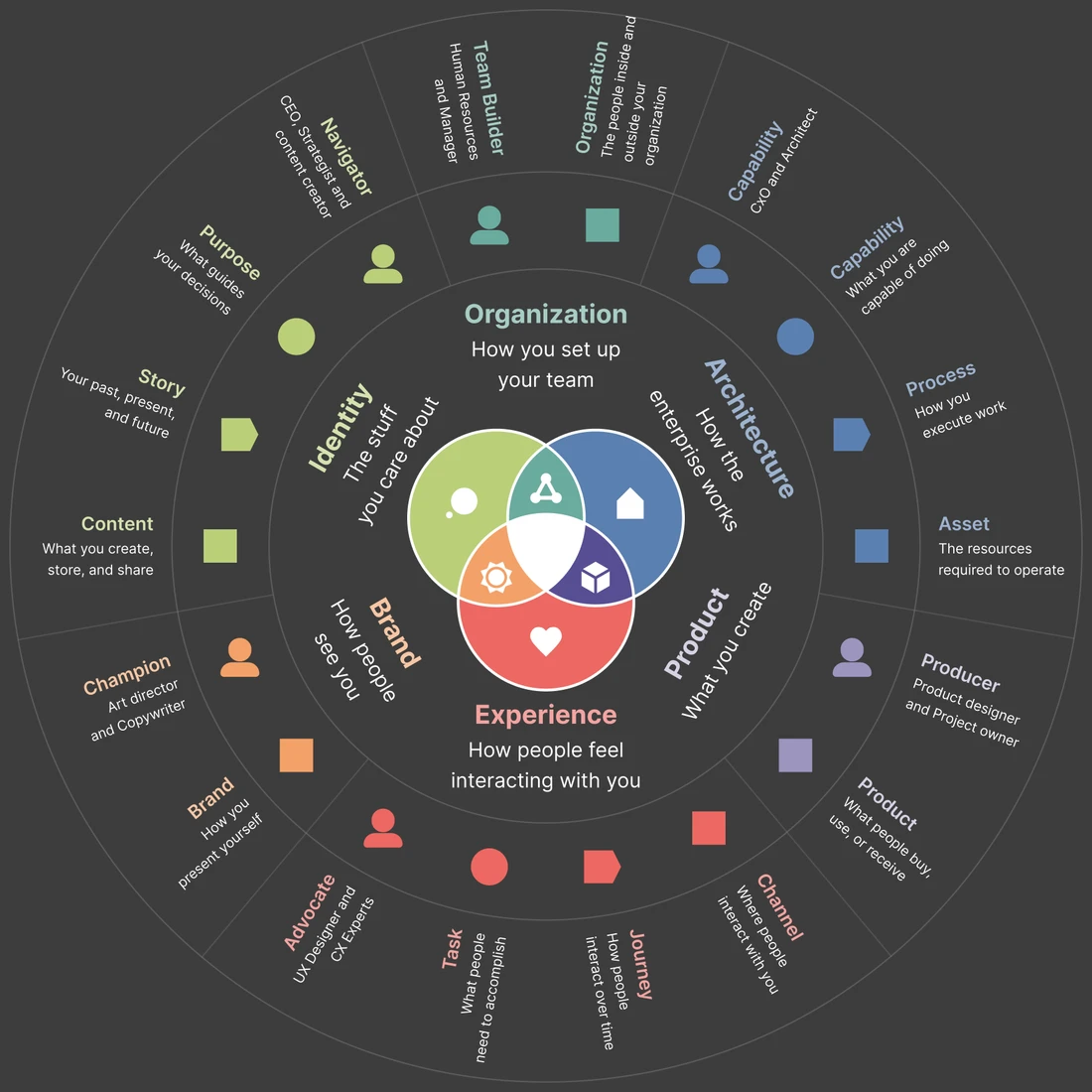
- Navigator Identity
CEO, strategist, content creator
- Team builder Organisation
HR and managers
- Capability Architecture
CxO and architects
- Producer Product
Product designer and project owner
- Advocate Experience
UX designers and CX experts
- Champion Brand
Art director and copywriter
Don't try to predict the future. Make it happen.
Always be clear whether you're talking about the future, the past or the present. Start with the future state: it tells you what's worth mapping today. Then plan how to get there.
 Future state
Start with where you want to go. Design thinking, Blue Ocean or a Business Model Canvas can all help.
 Current state
Map what you know about the enterprise today, guided by where you want to go. Don't over-map.
 Make decisions
You can't do everything at once. Decide, and put the first steps in order.
 Make it happen
Everyone knows where you are and where you're going. Now plan it and do it.
The Atlas: seven maps, use only what you need
The Atlas is the framework I built on top of EDGY. Seven kinds of map, each answering one question, at three levels of detail, with the raw data underneath. You rarely need all seven, and nobody should make you draw them all. The rule fits on a sticky note: use only what you need, update only when necessary.
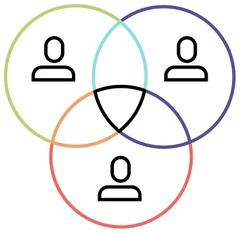 01
People Map
Who needs to be in the room, and what's the ambition?
6 people and an ambition
 02
Venn
What's our shared vision of the enterprise?
1 sentence per facet and intersection
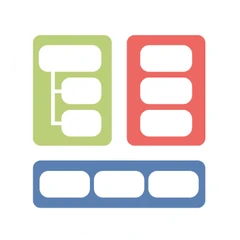 03
Core Map
What are our core elements?
3 to 5 per facet
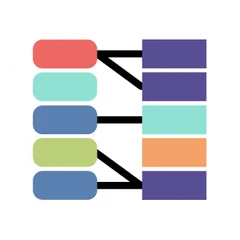 04
Gap Map
How are our core elements connected, and where does the loop break?
The links between core elements
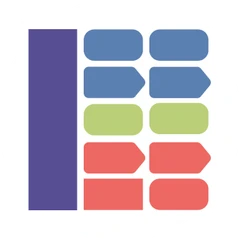 05
Blueprint
How do our steps hand off to each other? Silos appear where one step stops talking to the next.
5 to 10 steps per kind of activity
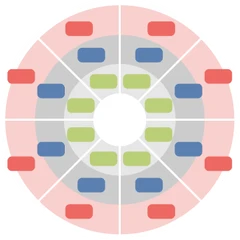 06
Milky Way
What does the whole enterprise look like, element by element?
About 50 elements, people and intersections
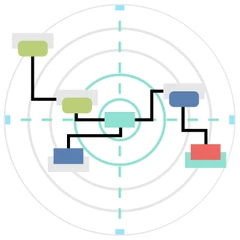 07
Universe Map
What influences us, and what do we influence?
5 to 10 outside forces
Three levels of depth: core, strategic, support
Every element on a map gets a depth. Deciding what's core is the most useful argument I start in a room, and the one people remember the next morning. The same map can then be read at the right depth for the right audience: the board doesn't need the support layer, and the experts can't work without it.
- CoreCommunicate3 to 5 per facet
What makes you you. Shared with everyone, remembered by everyone. Core is capped at 3 to 5 per facet, and the cap is the point: if everything is core, nothing is.
- StrategicCo-createAbout 50 elements
What teams need to shape the next move together. This is where workshops happen and trade-offs get made.
- SupportAnalyseAs many as it takes
Everything else it takes to run. Real, useful, and best left to the experts who live in it.
- UnderneathTrackEverything, always moving
Not a map: the territory. A machine follows it and pushes up whatever moves on your core.
Enterprise design in practice
A few projects where the work happened between the parts of an organization, not inside one of them.
 Québec TechFrom a manifesto to a new mission, a service portfolio and the KPIs to steer it.Read the case study →
 UPAHundreds of separate websites brought into one ecosystem that adapts to each visitor.Read the case study →
 Sépaq12+ departments aligned, and 12+ teams able to evolve the platform on their own.Read the case study →
 Boardroom AdventureEnterprise design made playable in an hour. 400+ decks sold in the first year.Read the case study →
Intersection and me
Intersection Group is the not-for-profit association that develops enterprise design and the EDGY language. I joined in 2019 and never really left. In October 2026, the Intersection conference came to Montréal and I organized it: three days, more than thirty sessions, one very tired organizer.
- Leadership and core team, since 2019
- I lead the development of our workshops
- EDGY contributor: co-author of its evolution, co-speaker and case studies
- Conference team, and organizer of Intersection 26 in Montréal
On the Intersection stage, every year since 2022
- How to Re-invent an Event with EDGY?Intersection Conference 2026, Montréal
- StratEDGY: Reframing the Core of Strategic ThinkingIntersection Conference 2025, Brussels
- Easy to Use, Hard to Master: How to Navigate EDGYIntersection Conference 2024, Rome
- A Year on the EdgeIntersection Conference 2023, Vienna
- Co-Designing Enterprise CoherenceIntersection Conference 2022, Stockholm
Common questions
What is enterprise design?
Where does enterprise design come from?
Is there evidence that this kind of work pays off?
Is enterprise design the same as enterprise architecture?
How is it different from UX or service design?
Does AI make enterprise design less necessary?
Is it only for large organizations?
What is EDGY?
What does an enterprise design project look like?
Can you learn enterprise design by playing?
Questions about me and Intersection Group are on the About page.
Read more
- There's no such thing as an enterprise designer
- The 7 maps of enterprise design, according to me
- EDGY is a Rosetta Stone
- Why is EDGY easy to use, hard to master?
- An enterprise is like… the Milky Way!
Further reading
- Intersection Milan Guenther, 2012: the book that named the discipline
- Enterprise Design Patterns Annika Klyver, Baard Papegaaij, Wolfgang Goebl and Milan Guenther, Intersection Group: 35 patterns you can use right away
- EDGY 23 Language Foundations Intersection Group, 2023: the official reference for the EDGY language
- The Lemonade Stand PrincipleComing soon Jean-Sébastien Daigle: enterprise design with EDGY, one lemonade stand at a time