


Libéo


- 18 → 80people, from Sys-Tech to Libéo
- 8years, 2012 to 2020
- 3teams led, 12 people
- OCTASa few awards for the agency's large digital projects
When I left in 2020, Libéo was a full-service digital agency of 80 people. That growth wasn't a backdrop to my role. I led it from the design side: new clients, new kinds of projects, and the teams able to deliver them.
My role grew with the company, one step at a time.
- 1DesignerSys-Tech, 18 people, open-source library software
- 2UX/CX designer and business analystWorkshops, research, processes, user stories, wireframes
- 3Team lead of three teamsTwo departments built from scratch, then designers, Design Sprint facilitators and front-end developers
The teams I led, and everyone around them
Three teams in the middle, and a line to every department that shaped the work: management for the rules, sales for the mandates, project managers and developers for the delivery, and the clients themselves.
My three teams · 12 people
- DesignUX, UI and CX designers
- Design Sprint facilitationClient sprints and workshops
- Front-end developmentFrom mockups to working interfaces
What I brought to Libéo
Design, from the start
In a company that built software, I brought UX, Design Thinking and Design Sprints to its clients, when few Québec agencies worked that way, and made design part of how every project started.
A new kind of work
With design came mandates the company couldn't take on before: large websites, platforms, applications and SaaS products. That work brought in the clients, the projects and a few OCTAS awards.
Design, sprints and front-end, together
As one of the first designers, I created the Design Sprint team, then took on the front-end developers so design and front-end would work as one. About 12 people, alongside project managers, solution architects and developers, in Agile and SCRUM.
The ISO rules
I wrote the rules for how we designed and built, so quality stayed the same as the agency grew from 18 to 80.
Help for sales
Workshops in pitches, proposals and calls for tenders: I helped win the mandates that fueled the growth.
The brand
Art director of Libéo's own brand and website: launched in 2017, reworked in 2018 with one electric blue, monochrome photos and everyday objects in blue.
The blue objects come from my 2018 work on Libéo's website.
The tools we used every day
I was also responsible for Libéo's internal tools: the time-punch software, the intranet, meeting room booking, and Momo, the vending machine. The software we built for clients deserved good design. So did the software we used ourselves.
Momo, the vending machine with a face
Momo had a screen and a few moods: delighted, fed up, sulking, or fast asleep. Choosing a snack, then a drink, was a small conversation.
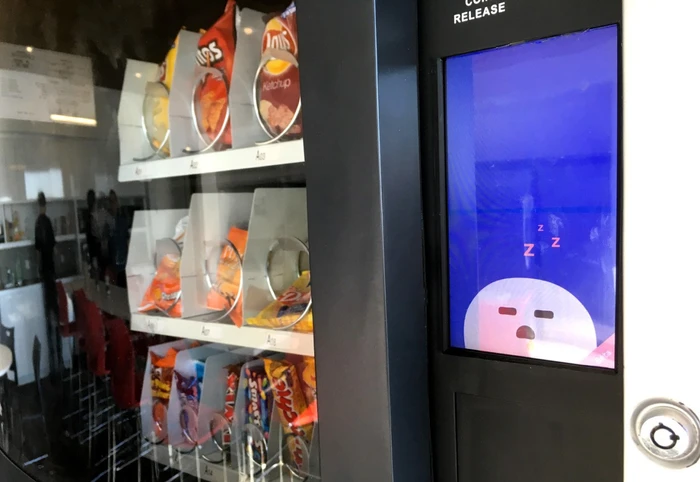




Mockups and photo from 2016 and 2017.
Design Sprint Academy · Google Sprint Conference
Bringing the Design Sprint to Canada
In September 2018, Libéo became the official partner of Berlin's Design Sprint Academy, exclusive for Québec and Ontario: the first firm in Canada able to teach its methods. I was one of the four facilitators, and Éric Letarte's partner in the venture. That November, I took the DSA Master training in Berlin.
Then I gave the practice a structure. Roles from coordinator to co-facilitator, a path to become a facilitator (the DSA bootcamp, six co-facilitated sprints, three facilitated with a mentor), a growth grid and the types of sprint we offered. Sprints and trainings followed for Bell, Revenu Québec, the Office québécois de la langue française, the Tribunal administratif du Québec, the Ville de Montréal, TFO, Groupe Océan and many others.
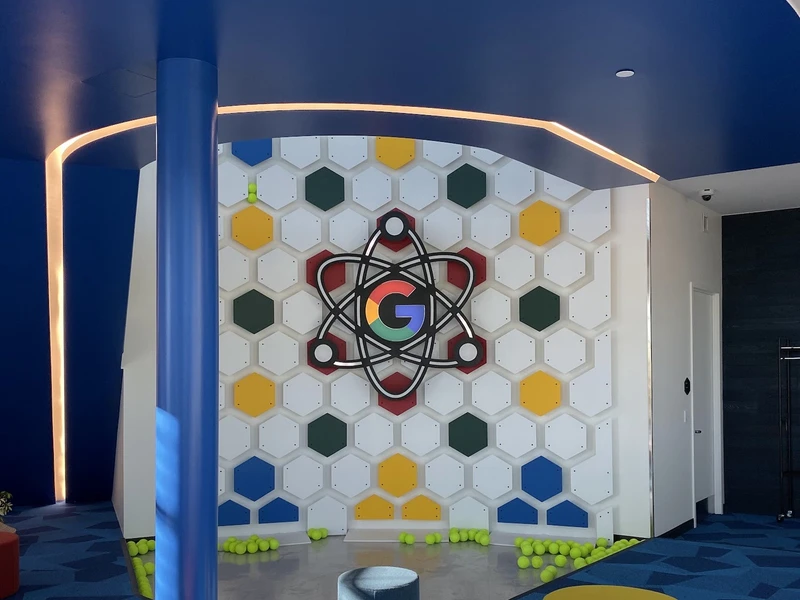
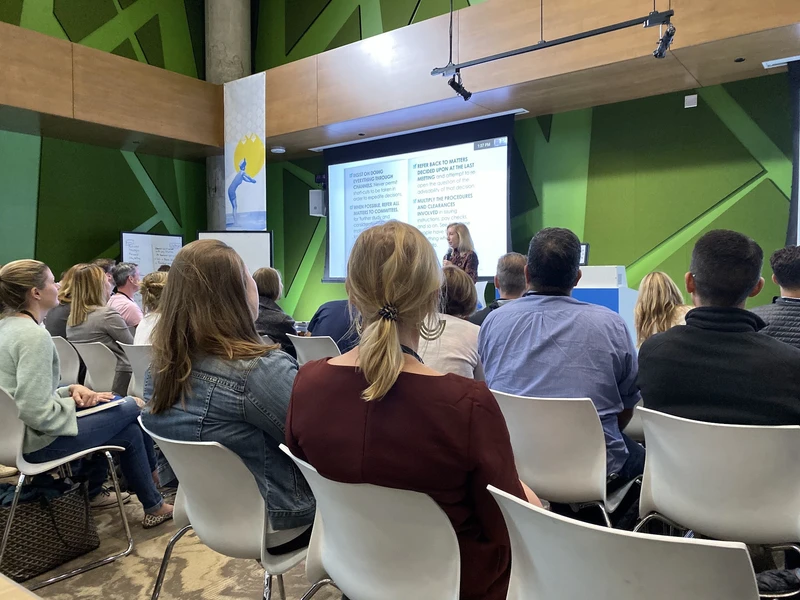
In fall 2019, Google invited us to its Sprint Conference in Boulder. My favourite workshop was “Enterprise Sprint”, by Tomomi Sasaki and Milan Guenther, whose enterprise design work I now contribute to through EDGY.
Libéo's announcement and my account of the Sprint Conference, in French.
- Sept. 2018Libéo becomes the official partner of Berlin's Design Sprint Academy for Québec and Ontario. I'm one of its four facilitators.
- Nov. 2018DSA Master training in Berlin.
- 2019Facilitator and Design Sprint coordinator, with a team of my own.
- Oct. 2019Google's Sprint Conference in Boulder, Colorado, by invitation.

Grand Prix Média · Radio-Canada Hackathon 2018
The AI hackathon we won
Artificial intelligence, in March 2018. Almost five years before ChatGPT.
Back then, AI was still a lab topic for most agencies. Our team of five won the Grand Prix Média at Radio-Canada's hackathon. The challenge: put artificial intelligence to work for the media, on Microsoft Azure, then pitch a working prototype, a business model and its architecture in three minutes.
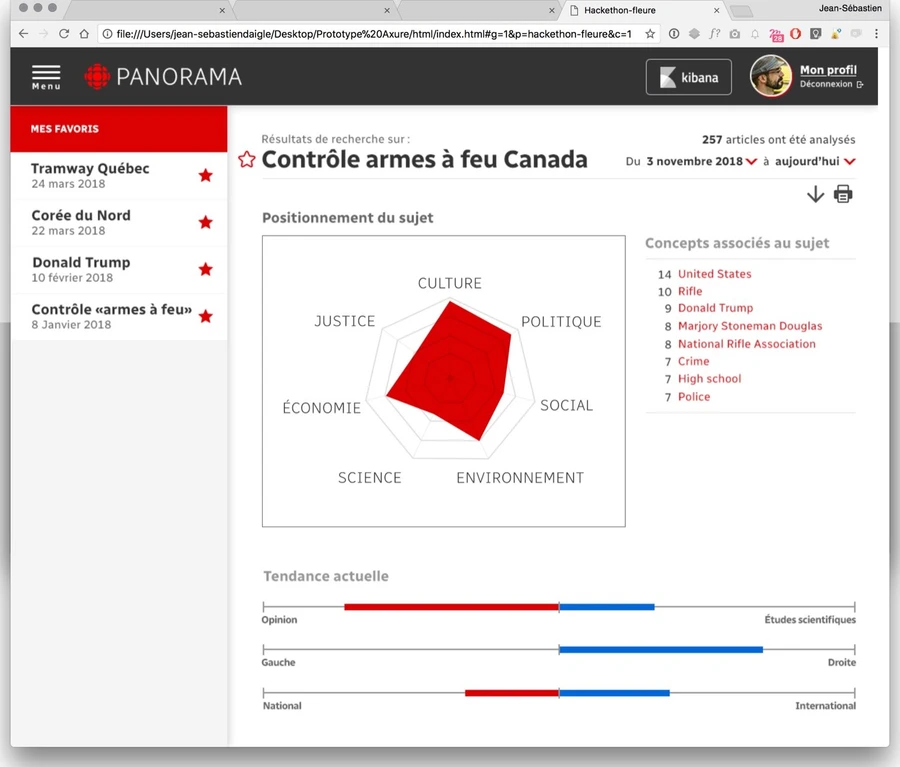
We built Panorama, a dashboard that places a story on the values of the public broadcaster's mission, so journalists can see what their coverage is missing. Radio-Canada's Neuro API, IBM Watson, Elasticsearch and Kibana under the hood, and a design sprint squeezed into one weekend, user tests included. I designed it, with Marie-Eve Pageau on project management, Frédérick Capovilla and Marc Boivin on development, and Éric Letarte on copy.
The project then became a new challenge with the MT Lab.
Libéo's post on Panorama, May 2018, in French.

Some funky projects
I touched everything. From the mega site to the tiny promo. From the intranet to IoT.
Online stores, management systems, public platforms and connected objects in between. Also from those years: the information architecture of the Autorité des marchés financiers, adaptive forms for the Tribunal administratif du Québec, and Previsio, the financial forecast tool of the École des entrepreneurs du Québec.
 Mega siteUnion des producteurs agricoles
 Public websiteAutorité des marchés financiers
 Tiny promoChocoPortrait
 Mobile appOHdio (Radio-Canada)
- Objectif numériquePublic platformMEIE (Objectif numérique)
 Product catalogueSoprema
 ERP ordering toolMatelas Dauphin
 MarketplaceAutoUsagée.ca (AMVOQ)
 Design sprintNespresso
 Media siteShowbizz.net
 Online bookingSociété des traversiers du Québec
 IoTA smart vending machine with RFID payment
Office culture
The Post-it War, 2015
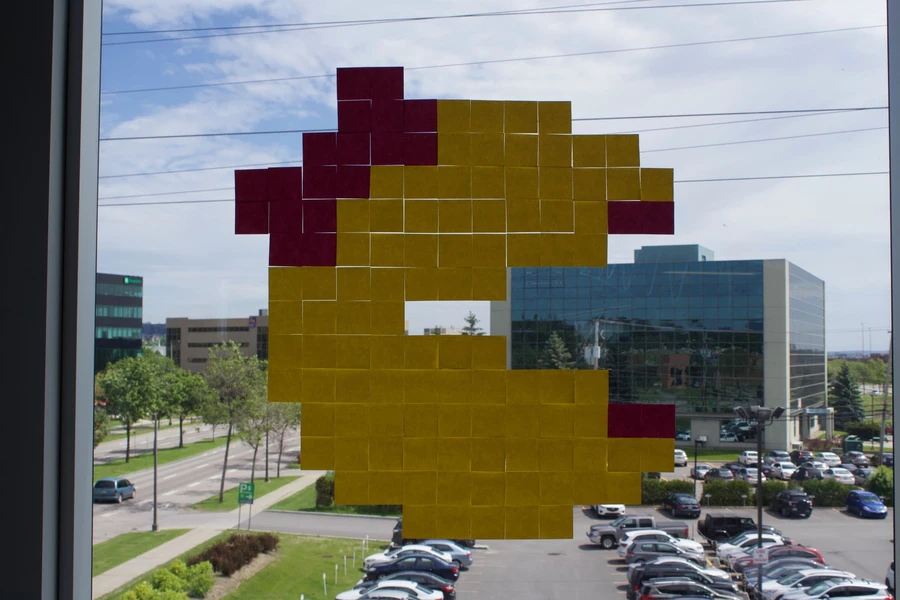
In June 2015, office windows across Québec City were covered in sticky-note pixel art: Cabane, Le Camp, Ubisoft, Beenox and others. I rallied Libéo into the fight, “let's send a telescope to the St-Roch crowd,” then organized a second battle, with the whole team pitching retro video game designs for the windows.
Talks, workshops and press
Libéo was also a stage. A few of the places I spoke for it, or about it.
- “Dear Designers, This One's on You…”Talk, Web à Québec 2019
- A hands-on introduction to Design ThinkingWorkshop, ACCRO Montréal 2019, with Amélie Bissonnette-Montminy
- Design Sprint workshopsCoopérathon Desjardins, 2018 and 2019
- The Branding SprintInfopresse, 2018
- Québec delegation to Web2dayNantes, France, 2018
- On the hackathon winRadio-Canada, Première heure, 2018
- Design vs UXMon Carnet podcast, 2018
Where Libéo is today
Libéo is still a full-service digital agency, with offices in Québec City and Montréal and more than 75 digital specialists working from across Québec. It builds custom software, websites and apps. Its awards include nine OCTAS, a Boomerang grand prize and a Numix. Figures from libeo.com.
- 75+digital specialists
- 9OCTAS awards
Credits
- Designer, then team lead of three teams
- Jean-Sébastien Daigle · Libéo